Saw parts coming later this year

I’ve had many inquiries from craftsmen looking for saw parts. While it has been frustrating to not be able to offer these yet, it is heartening to see the interest in making tools.

I do not currently make backs or blades for sale, but am in the middle of a search for a new house with a shop that will give me the space to do so. [Edit to add – I still make and sell blades for Roubo frame saws.]

Once that hurdle is cleared, I will be able to offer slotted backs (sorry, but I have no plans to offer folded backs in the near future) in both brass and stainless steel. Matching saw nuts and bolts will be available, as well as saw blade stock.

In the meantime, if you know of a small country house with a large shed or garage in eastern Lancaster county, please do drop me a line.

Posted in Announcements | Leave a comment

A large pear log

One of the best parts about making saws is the excellent cover it provides for buying and hoarding lumber for future handles. Whether it’s a small piece I find in a firewood pile or a large log on a woodlot, having the opportunity to participate in hunting out and cutting wood is a real bright spot in any day.

One of the chief enablers in this endeavor is Greg Flegal, a woodmonger who runs a part-time bandsaw mill near Kennett Square, PA. If you live anywhere in Chester County, it’s worth a trip to take a look at his operation.

Unlike most commercial yards, the bulk of his lumber is stored in flitches, which is helpful when you want consistent grain and color for a project. With many of his logs coming from yard trees, many offbeat or unusual woods turn up. In the past year, I have bought ginkgo (20″ wide, 14′ long, knot-free, and dead straight), apple, walnut and cherry crotches, and pear.

Best of all, he calls me when an interesting log shows up at his mill. When his number popped up on caller ID earlier this week, I cringed, knowing that my bank account was about to take a hit. This call was about a fruit pear, and a large one at that. The butt log was 16″-18″ in diameter, and about 4′ long. Two of the other logs were a few inches smaller, but still large for a pear.

Like any good dealer, he knows that the surest way to sell to an addict is to let them see and taste the product. When the first log was opened up, I knew I had to have it. Worse yet, Greg knew that, too. Fortunately, he is a swell fellow and did not skin me alive in the deal.

It’s as if he knows I’ll be back…

Cutting the first slab from the larger log.

Cutting the first slab from the larger log.

One of the smaller branches.  Although the colors will fade, it's amazing to see the colors that are present in freshly sawn wood.

One of the smaller branches. Although the colors will fade, it’s amazing to see the colors that are present in freshly sawn wood.

The sawn logs. In contrast to the boards in the previous picture, the slabs from the larger log were entirely creamy white.

The sawn logs. In contrast to the boards in the previous picture, the slabs from the larger log were entirely creamy white.

The saw elves came along for the ride.

The saw elves came along for the fun.

Posted in Wood | 2 Comments

Dancing saw handles

Other than proving that I am easily amused, this picture has no real purpose.

dancing-handles

Posted in Visual pleasures | 1 Comment

Saw build along – Handle, Part IX

This is the tenth entry in a nineteen part series that covers the construction of one of my saws from start to finish. For links to the other entries, please see the full chronological index.  -Ed.

Finishing

After drilling the holes for the nuts and bolts, I sand the handle one final time with the finest grit (usually 360 or 400), looking closely for any stray marks that need more attention.

The finish I use for most of my handles is Tru-Oil, a linseed oil based wiping finish sold for finishing gun stocks. It is fairly simple to apply (wipe on with a fingertip and/or rag), dries quickly (an hour or two in most cases), builds fast, and is durable. It certainly is not perfect, but it is as easy and good as anything else I have tried.

Tru-Oil will darken the wood and has a golden tint to it, so if you are looking for a crystal clear finish, look for something else.

Since I am about the last person you want to ask for finishing advice, this will be a short post.  The best tip I can give is to use a scrap of saw blade (or the actual blade itself if you want to clean it off later) as a stand for the handles to dry on.

Saw handles in the white. The apple handle we have been following is the second from the right; it is flanked by rift=sawn cherry on the left and quartersawn beech on the right.

Saw handles in the white. The apple handle we have been following is the second from the right; it is flanked by riftsawn cherry on the left and quartersawn beech on the right.

Some random in-progress pictures of finishing.

A random in-progress picture of finishing.

The handle with one coat of Tru-Oil; flanked again by cherry on the left and beech on the right.

The handle with one coat of Tru-Oil; flanked again by cherry on the left and beech on the right.

Another shot of some more handles in the same batch. Walnut crotch on the left and right, lightly spalted walunt in the center.

Another shot of some more handles in the same batch. Walnut crotch on the left and right, lightly spalted walnut in the center.

Our apple handle with two coats of Tru-Oil.

Our apple handle with two coats of Tru-Oil.

Another shout of our apple handle with two coats of Tru-Oil.

Another shot of our apple handle with two coats of Tru-Oil.

One final shot or our apple handle with two coats of Tru-Oil.

One final shot of our apple handle with two coats of Tru-Oil.


With that, work on the handle has been wrapped up. From here we move on to making the spine and the blade.

Posted in Saw making | 3 Comments

Saw build along – Handle, Part VIII

This is the ninth entry in a nineteen part series that covers the construction of one of my saws from start to finish. For links to the other entries, please see the full chronological index.  -Ed.

Boring the holes for saw nuts & bolts

I must go back to a step that I failed to mention in previous steps.  Before sanding the handle, and before removing the paper template, the bolt hole centers must be marked.  I happen to use a Scrawl*, which is an excellent tool for the task, but any pointy metal object will work.

*This shameless plug was inserted at the request of the fine sponsor of this blog, who has a financial stake in the product. -Ed.

Marking the bolt hole.

Marking the bolt hole with a Scrawl.


If you are not following an existing pattern or copying a handle, there are a few guidelines I follow for bolt placement. I thank Pedder (half of Two Lawyers Tools) for helping to crystallize my thoughts on this topic with his helpful critiques of my early saws.

For a saw with just two bolts, I find that the most pleasing arrangement has both bolts equidistant from the edge of the cheeks. For the most resistance against rotation, place them as far apart as possible.

Saw bolts are not equidistant from the edge of the handle.

Saw bolts are not equidistant from the edge of the handle.

Saw bolts are equidistant from the edge, but spaced a little too close together.

Saw bolts are equidistant from the edge, but spaced a little too close together.

This is just right - bolts are equidistant from the edge and spaced about as far apart as possible.

This is just right – bolts are equidistant from the edge and spaced about as far apart as possible.


On larger saws I use three saw bolts. I find that the pattern looks best when the bolt placement forms an isosceles triangle.  While I used to keep two of the bolts equidistant from the edge of the handle, I now place one bolt so that it passes through the spine (thanks to Marv Warner for sharing his thoughts with me on this).  While I think this adds a bit of strength to the saw, it is best to keep that bolt some distance back from the edge. Matching this edge distance for the other bolt looks awkward, so it remains closer to the edge.

If you do not place a bolt through the spine, then an alternative pattern with equal edge distances and that forms an isosceles triangle is possible.

Legs A & B being unequal, the bolt layout forms a scalene triangle.

Legs A & B being unequal, the bolt layout forms a scalene triangle, a pattern that I find unpleasing.

Legs A & B being equal, the bolt layout forms an isosceles triangle. As one of the bolts passes through the spine, the two outer bolts are not equidistant from the edge.

Legs A & B being equal, the bolt layout forms an isosceles triangle. As one of the bolts passes through the spine, the two outer bolts are not equidistant from the edge.

Legs A & B being equal, the bolt layout forms an isosceles triangle. As none of the bolts pass through the spine, the two outer bolts are equidistant from the edge.

Legs A & B being equal, the bolt layout forms an isosceles triangle. As none of the bolts pass through the spine, the two outer bolts are equidistant from the edge.


After marking the bolt locations and sanding the handle, I drill a 3/16″ hole through the handle. Since this hole guides the counterbores I use in the next steps, I use a high-quality brad point bit.

I use a piloted counterbore with a depth stop to bore the holes for the heads of the bolts and nuts. Although the counterbore is a metalworking tool, it leaves an excellent finish on wood. I use an aluminum block as a spacer to give the chips from the counterbore someplace to go.  Without the spacer, chips cannot be ejected, and clog at the depth stop. The holes for the bolt and nut are both bored to the same depth; because I use a washer beneath the head of the bolt, it is machined slightly thinner so that both the nut and bolt will be flush to the handle when torqued down.

Finally, I bore a 1/4″ hole on the back side for the extended shank on the split nut.

Side view of the bolts and split nuts that I make and use.

Side view of the bolts and split nuts that I make and use.

Tools for boring, from left to right:  wear plate, aluminum spacer, 3/16" brad point bit, 1/4" piloted counterbore with depth stop, 7/16" piloted counterbore with depth stop.

Tools for boring, from left to right: wear plate, aluminum spacer, 3/16″ brad point bit, 1/4″ piloted counterbore with depth stop, 7/16″ piloted counterbore with depth stop.

Drilling the thru-hole with a 3/16" brad point bit. Don't be jealous of my awesome drill press table.

Drilling the thru-hole with a 3/16″ brad point bit. Don’t be jealous of my awesome drill press table.

Preparing to counterbore for the bolt.

Preparing to counterbore for the bolt.

Ready to counterbore for the heads of the split nuts (identical to counterboring for the bolt head).
Ready to counterbore for the heads of the split nuts (identical to counterboring for the bolt head).

Counterboring for the head of the split nut.

Counterboring for the head of the split nut.

Preparing to counterbore for the shank of the split nut.

Preparing to counterbore for the shank of the split nut.

Ready to counterbore for the shank of the split nut.

Ready to counterbore for the shank of the split nut.

Counterboring for the shank of the split nut.

Counterboring for the shank of the split nut.

Bored on nut side.
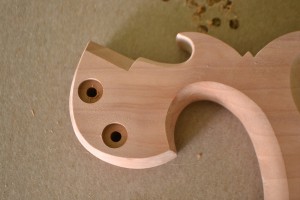
Bored on nut side.

Bored on bolt side.

Bored on bolt side.

Posted in Saw making | Leave a comment

Latest batch of RakeMaker II’s ready to ship

Thank you to all that have patiently hung in there with their order of the RakeMaker II. The next batch is ready to ship, and emails have been sent to those at the top of the list. I think you will find that it was worth the wait.

If you did not receive an email, rest assured that I am working on yours as fast as possible. I do wish that I could make them as fast as you are ordering them, but alas…

rmii-array rmii-array-close

RakeMaker II with cherry handle and level attachment.

RakeMaker II with cherry handle and level attachment.

Posted in Announcements | 4 Comments

Price increase for apple & walnut crotch saw handles

When I began making saws I had access to a small stash of walnut crotch and apple from a local sawyer.  Now, a year into this venture, I have worked through that supply and need to develop new and additional sources for those woods.

Unfortunately, the market prices for a reliable supply of these woods are higher than what I paid for those first boards.  To cover these increased costs, I must raise the prices for walnut crotch and apple handles.

The new cost for apple is $23; walnut crotch now costs $55. The cost for other handle wood options are unchanged.

Any orders placed before this announcement will, of course, be fulfilled at the old pricing.

Finally, I ask for your patience if you have placed an order for a walnut crotch handle, as there may be some delays while I sort out the new supply.

Posted in Announcements | Leave a comment

Saw build along – Handle, Part VII

This is the eighth entry in a nineteen part series that covers the construction of one of my saws from start to finish. For links to the other entries, please see the full chronological index.  -Ed.

Sanding the handle

I can’t believe I am actually writing about sanding.  I long ago moved to scrapers (when possible) in my general woodworking projects, but have found sanding to be a necessity in handle making.  Still, I hate sanding.

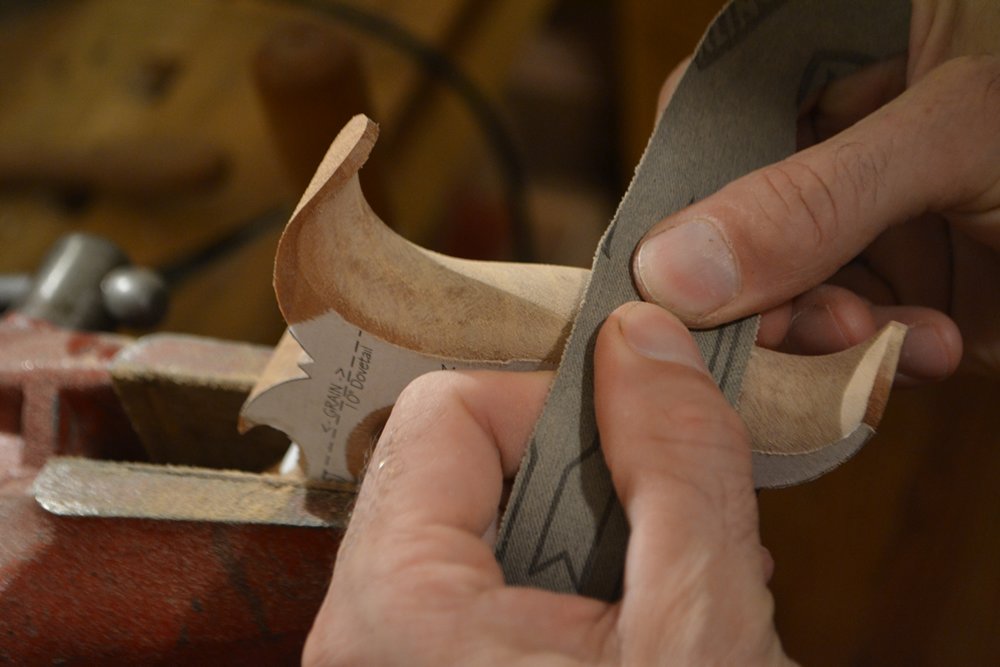
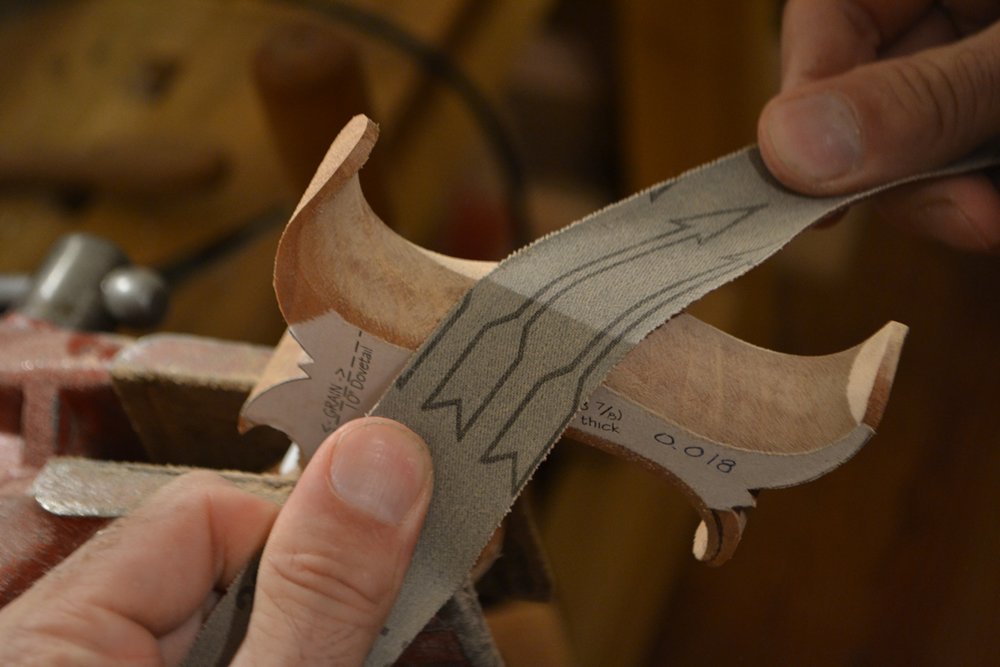
I use cloth backed sandpaper, torn into narrow strips, for all of the sanding on contours.  It is available in a wide variety of grits and backings, but I just buy a bargain box from Klingspor. As long as you don’t have a specific need, it can be a terrific deal.  It’s a wonderful thing to not have to wring out every last bit of life from every scrap of sandpaper – as soon as a strip begins to clog, it gets tossed. A small luxury, perhaps, but anything that lessens the tedium is welcome.

There’s not a whole lot to it.  Just keep the sandpaper moving around so as not to create facets. I generally begin at 100 grit and work my way up through 320 or 400 grit.

Fresh from the file, this is the starting point.

Fresh from the file, this is the starting point.

What's the best way to sand this? Get Rhythm.

What’s the best way to sand this? Get Rhythm.

Detail sanding.

Detail sanding.

More detail sanding.

More detail sanding.

And even more detail sanding.

And even more detail sanding.

Knocking down a high spot.

Knocking down a high spot.

Sand from a variety of angles and directions to blend all of the curves together.

Sand from a variety of angles and directions to blend all of the curves together.

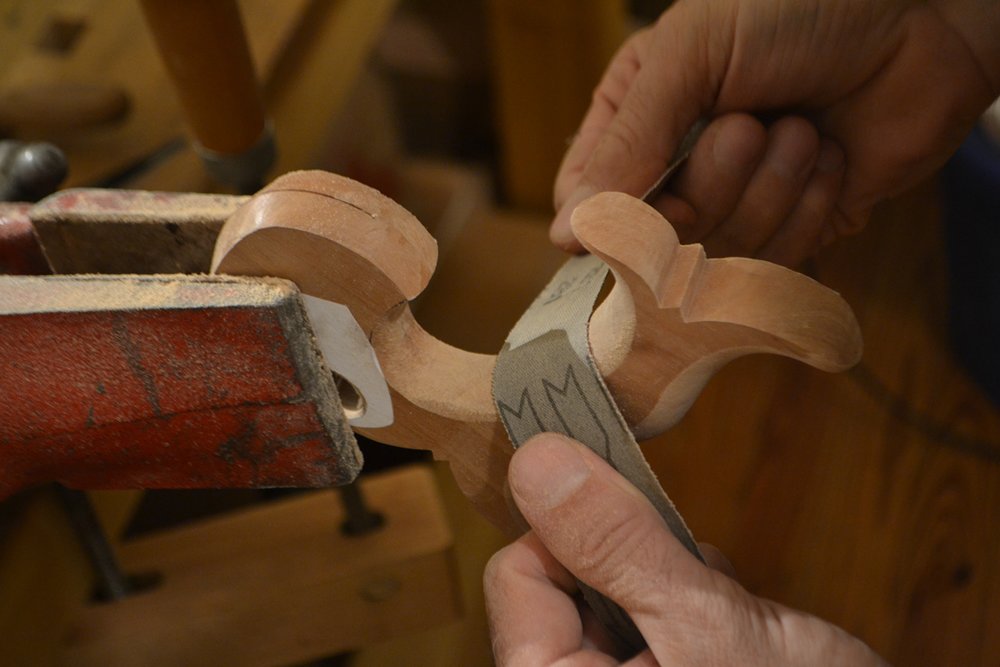
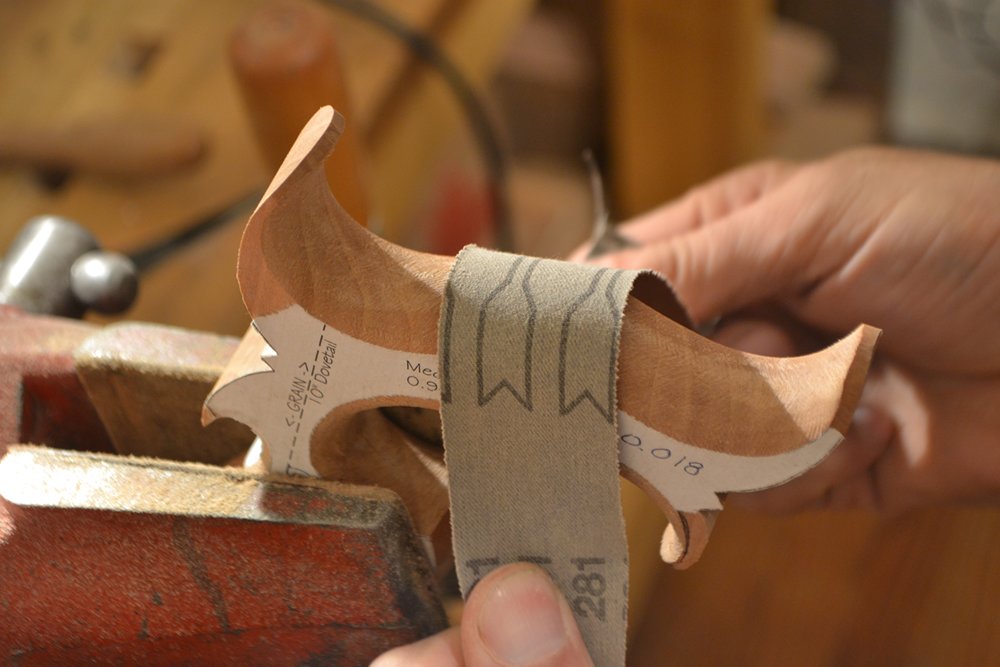
Sanding the inside curve is about the same as the outside.
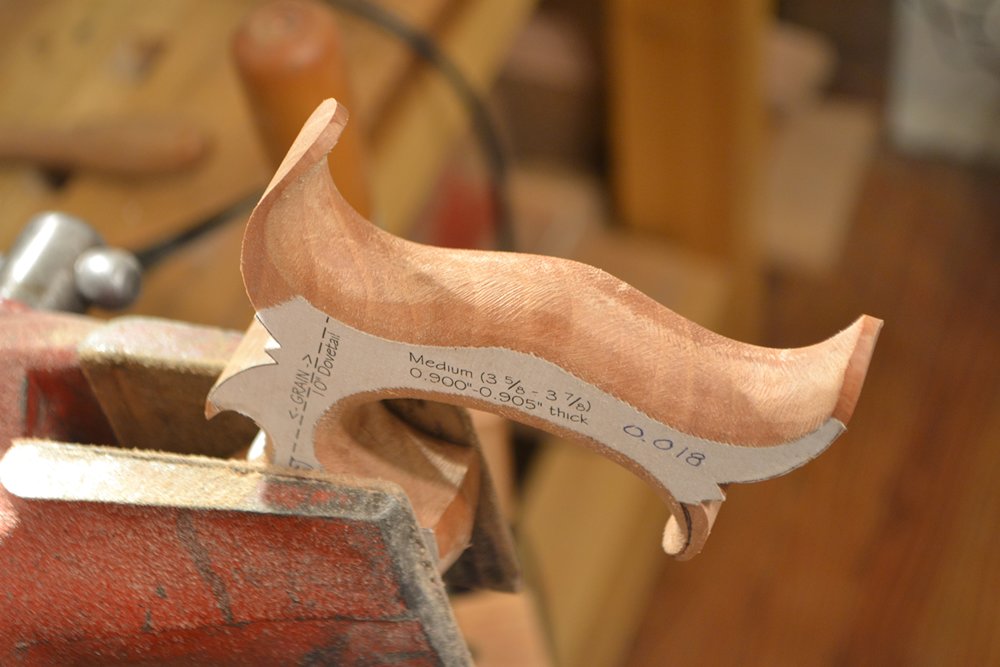
Sanding the inside curve is about the same as the outside.
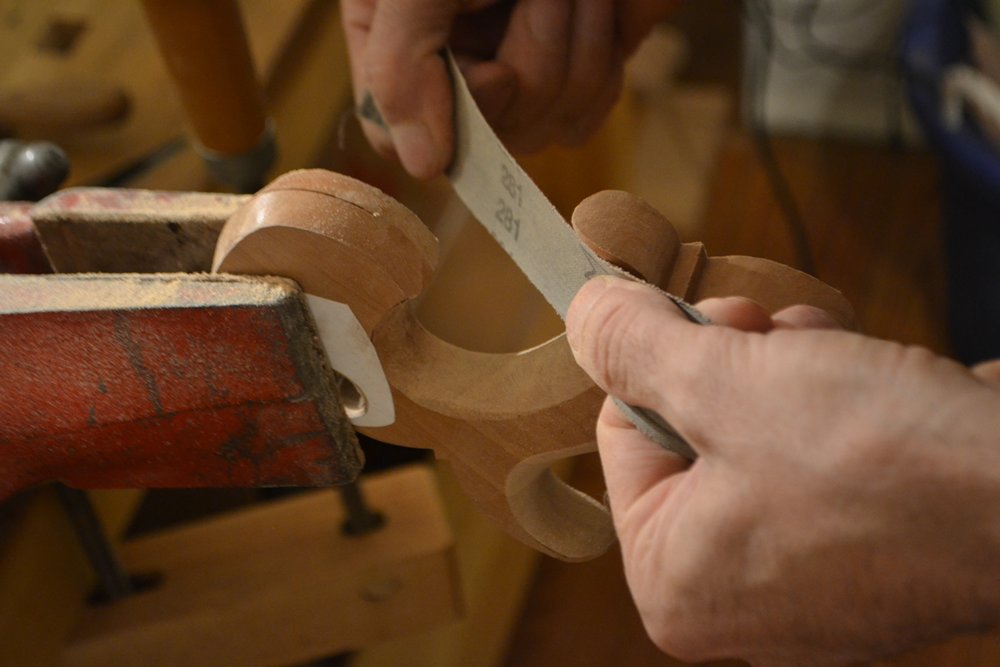
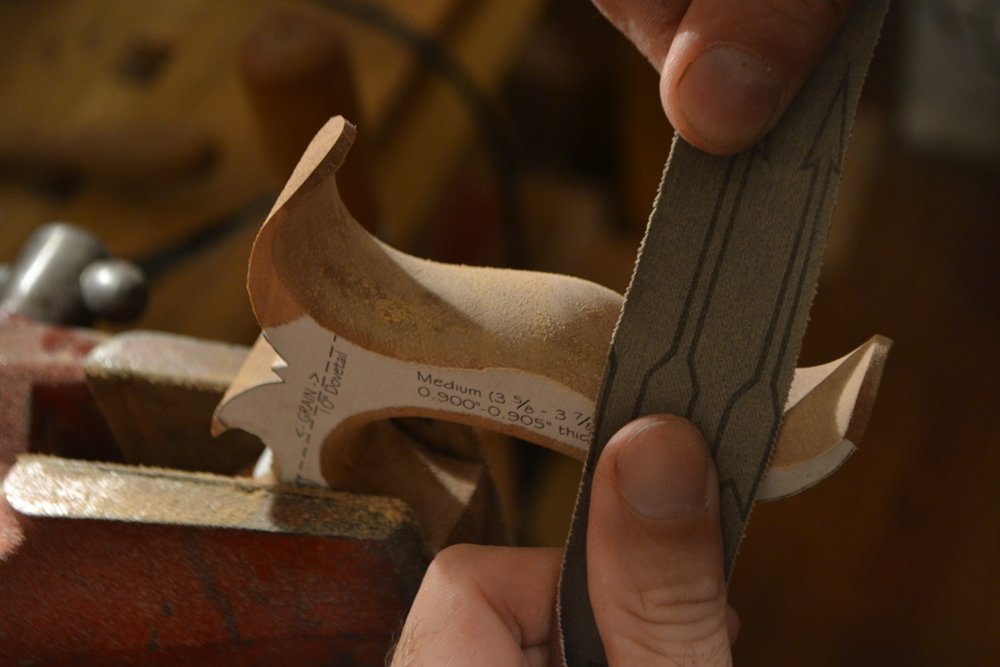
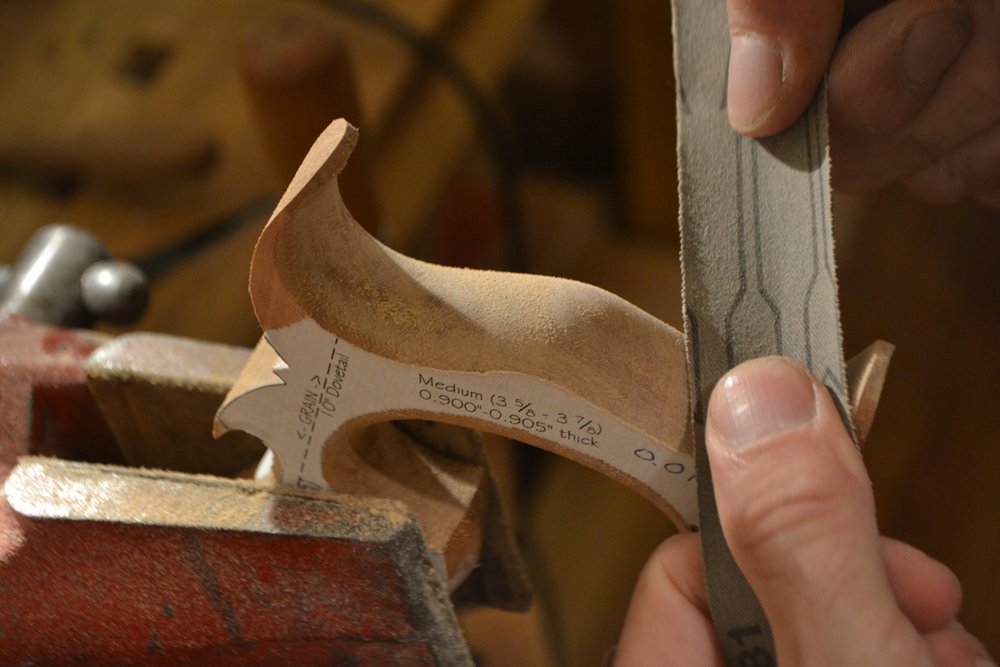
Some of the inside curves are a little tight.

Some of the inside curves are a little tight.

Sanding the edge of the horn.

Sanding the edge of the horn.

I back the sandpaper with a strip of metal when I sand the chamfers...

I back the sandpaper with a strip of metal when I sand the chamfers…

...and when I sand the horns...

…and when I sand the horns…

...and the chamfers. I usually start sanding these at a higher grit than the curved surfaces, as the Vixen files leave a more finished surface than the rasps.

…and the chamfers. I usually start sanding these at a higher grit than the curved surfaces, as the Vixen files leave a more finished surface than the rasps.

Sanding the lamb's tongue transition.

Sanding the lamb’s tongue transition.

I usually round over the tips of the nibs so they are not so fragile.

I usually round over the tips of the nibs so they are not so fragile.

The last thing I do is break the edges with a fine grit.

The last thing I do is break the edges with a fine grit.

Looking at the handle from a variety of angles and with raking light can highlight missed areas and stray rasp marks.

Looking at the handle from a variety of angles and with raking light can highlight missed areas and stray rasp marks.

This is why I buy sandpaper in bulk.

This is why I buy sandpaper in bulk.


After the contours and edges are sanded, I move onto the sides.  This is the one part of sanding that I do enjoy; it’s almost exciting to see the final contours emerge as the grime and scratches from handling the wood are removed.  

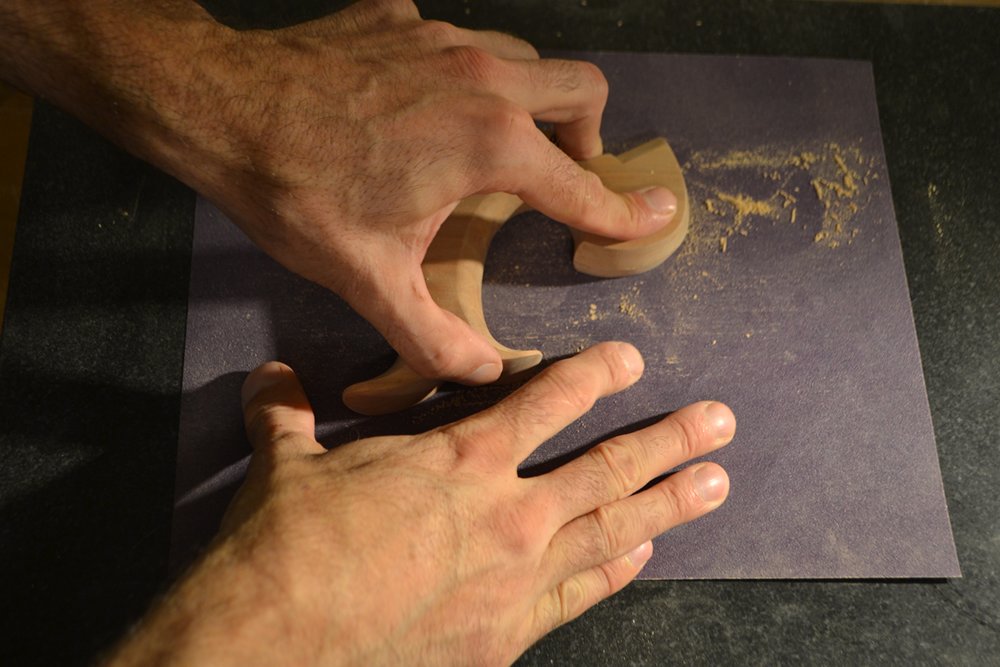
I use sheets of sandpaper laid on a granite surface plate. Great care must be taken to keep the sandpaper flat on the surface to prevent rounding over or dubbing the leading edge of the handle. My preferred paper is 3M’s No-Slip Grip sandpaper.  It is available in a full range of grits, and has a slightly tacky backing that hugs the granite.  It costs slightly more than conventional sandpaper, but lasts a long time (the single sheet in the picture below has sanded about two dozen handles, and still has some life left).

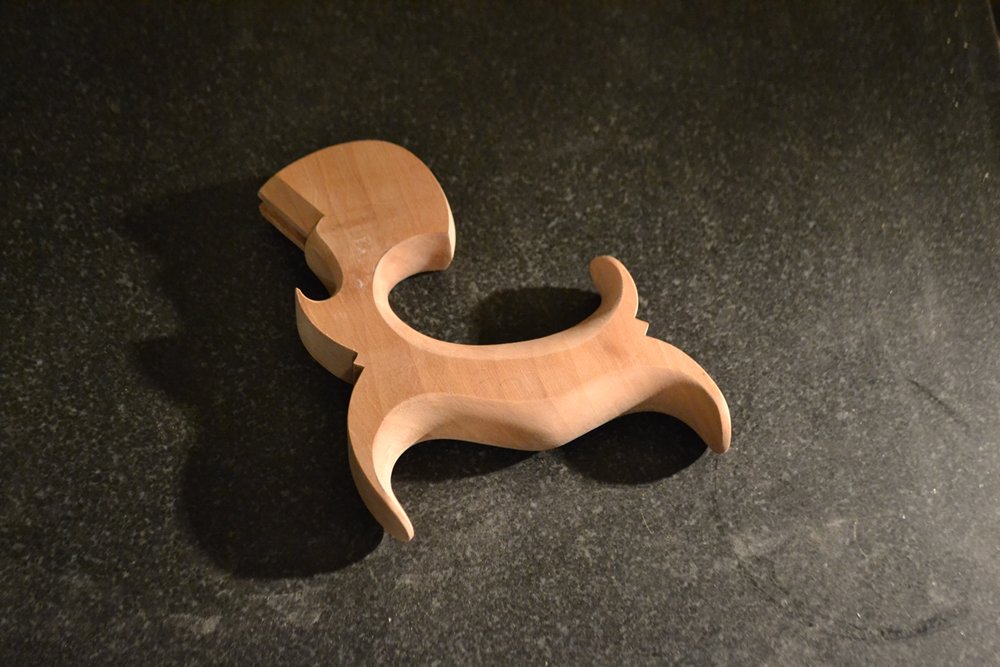
This is the handle after working though 320 grit on the curved surfaces, but before sanding the flat sides.

This is the handle after working though 320 grit on the curved surfaces, but before sanding the flat sides.

Sanding the flats. Take care that the sandpaper does not raise up and dub the edges.

Sanding the flats. Take care that the sandpaper does not raise up and dub the edges.


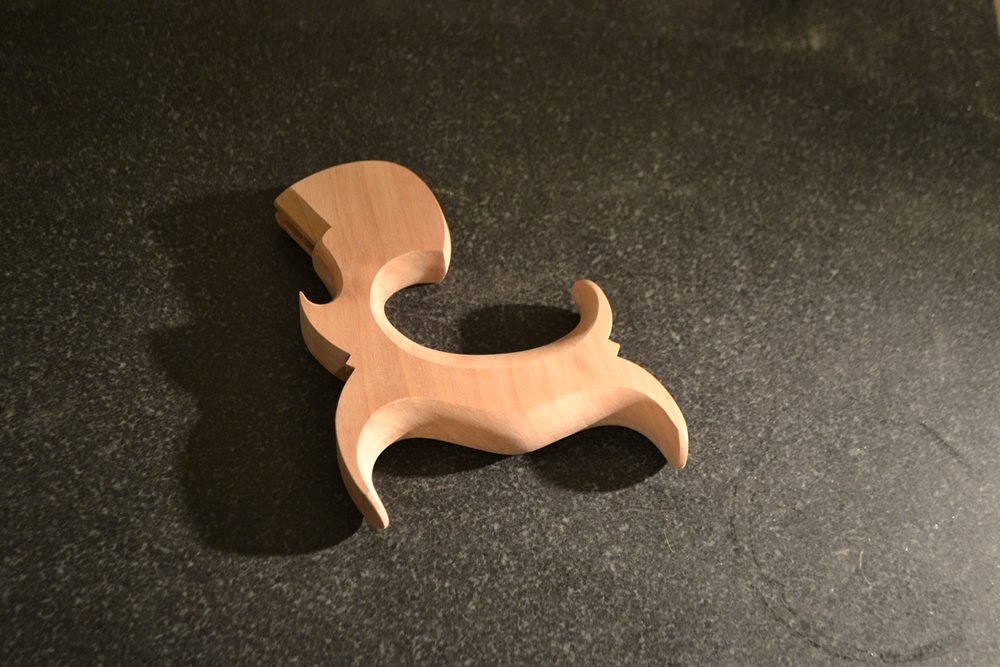
Sanding in this manner gives nicely rounded contours that are pleasantly framed and contrasted by well-defined flats. George Wilson put it well when he said that the resultant curves are reminiscent of calligraphy. While the lines look crisp, they are nearly imperceptible to the hand in use. 


The handle after sanding through 320 grit.

The handle after sanding through 320 grit.


The sanding is not yet actually done.  After drilling for the saw nuts and bolts, I will sand one final time with 360 or 400 grit immediately before finishing.

Posted in Saw making | 2 Comments

Saw build along – Handle, Part VI

This is the seventh entry in a nineteen part series that covers the construction of one of my saws from start to finish. For links to the other entries, please see the full chronological index.  -Ed.

Lamb’s tongue & chamfer 

When I began really looking at saw handles, I noticed a wide variation in how the transition between the chamfer and the beak or cove was made.  Some were elegant, some were clumsy, and some were nonexistent.
When I began making my own saws, I wanted to incorporate a detail that was both original and unique, and that could be used on any saw I made in the future.  The flourish that I kept coming back to was a lamb’s tongue.
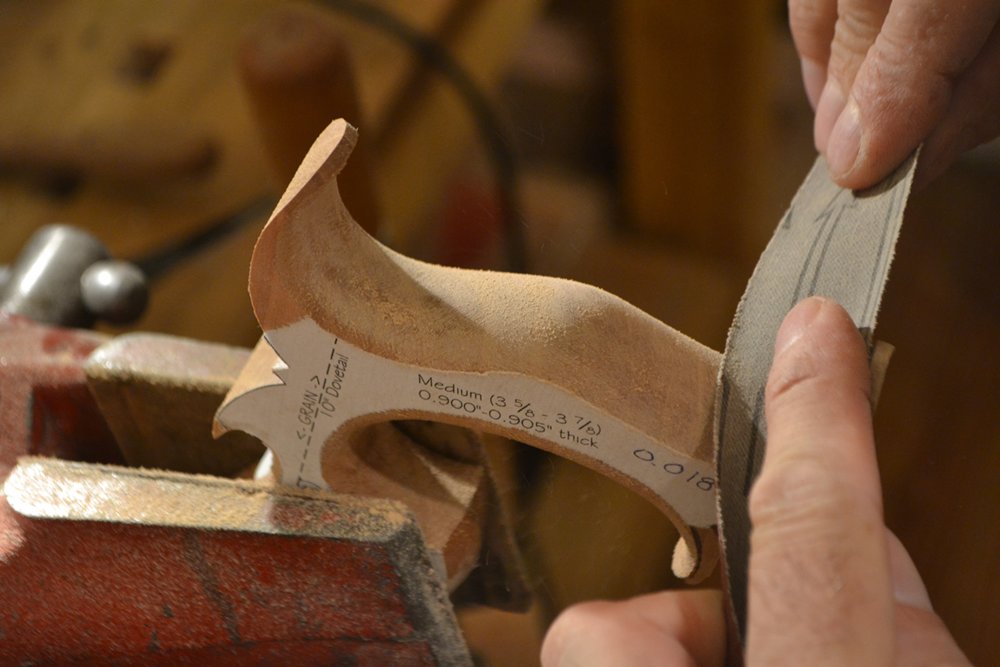
I love a good lamb’s tongue detail, using it wherever I can work it into a project, and so it seemed like a natural fit.  After a bit of sketching and some work with a rasp and chisel, I settled on the transition that I now use.

Laying out the chamfers and lamb’s tongues is the first step.  When that is done, I begin working on the chamfer by flattening and smoothing the top of the handle.  I switch between using a Vixen file and a chisel, depending on the wood.  In general, the harder the wood, the better the file works on it.

I use paper templates as a guideline.

I use paper templates as a guideline.

Using a Vixen file to smooth out the top of the handle.

Using a Vixen file to smooth out the top of the handle.

Using a chisel to smooth out the top of the handle.

Using a chisel to smooth out the top of the handle.


The final layout is to mark the edge of the chamfer on the top of the handle.  I waste the bulk of the chamfer with a Vixen file, then may clean it up with a chisel to end up with a nicely faceted chamfer.  As I work, I check from various angles to verify that all of the facets are symmetric and of a consistent width.

Marking the top edge of the chamfer.

Marking the top edge of the chamfer.

Using a Vixen file to cut the chamfer.

Using a Vixen file to cut the chamfer.

Completed chamfer.

Completed chamfer.

Both chamfers done.  Check from different angles to ensure symmetry and  parallelism.

Both chamfers done. Check from different angles to ensure symmetry and parallelism.


The final step is to carve the lamb’s tongue, which is actually done with the handle maker’s rasp from Tools for Working Wood.  No secrets here – it’s just a matter of taking my time and working carefully with a steady hand.

I use the handle maker's rasp from Tools for Working Wood to sculpt the lamb's tongue.

I use the handle maker’s rasp from Tools for Working Wood to sculpt the lamb’s tongue.

Rounding over the lamb's tongue with the handle maker's rasp.

Rounding over the lamb’s tongue with the handle maker’s rasp.

Lamb's tongue roughed out and ready for sanding.

Lamb’s tongue roughed out and ready for sanding.

Another view of the lamb's tongue.  I never tire of this detail.

Another view of the lamb’s tongue. I never tire of this detail.


With this detail completed, shaping of the handle is completed.  All that remains is to sand it (lots of that ahead), drill for the saw nuts and bolts, and then finish it.

Posted in Saw making | Leave a comment

Saw build along – Handle, Part V

This is the sixth entry in a nineteen part series that covers the construction of one of my saws from start to finish. For links to the other entries, please see the full chronological index.  -Ed.

On letting the spine into the handle

Before cutting the mortise for the spine, it is worthwhile to pause and contemplate the importance of accuracy and precision in this step.

Let us assume that the slot for the blade was cut properly (parallel to the cheeks of the handle).  It is now critical that the mortise for the spine be parallel to the slot (and thus to the cheeks).  Additionally, it is very important that the slot in the spine and the handle are aligned when the mortise is completed.  This is true of both slotted and folded spines.

If either of these criteria are not met, the saw blade will deflect when the saw is assembled, an affliction that is difficult or impossible to remediate.

If the mortise is properly aligned, then bonus points are awarded for completing the mortise so that no gaps are visible when the saw is assembled.

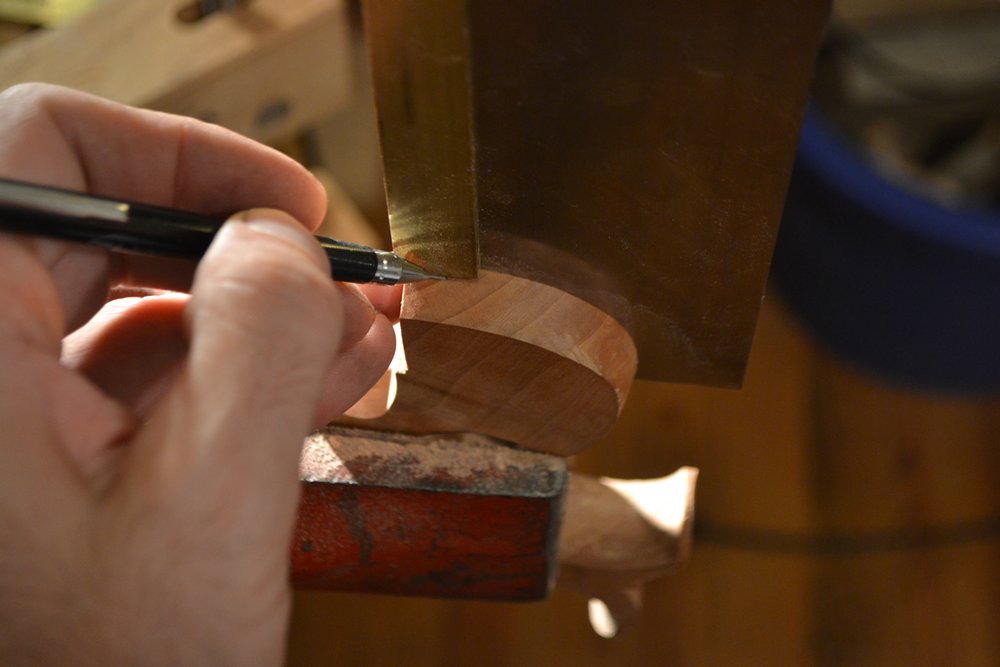
I mark the mortise by assembling the blade and spine, then sliding the blade into its slot in the handle.  It the blade slot was cut correctly, the spine will naturally sit so that it is parallel to the cheeks of the handle, so long as the free end of the spine or blade is not pushed to one side or the other.

Mark the mortise on the top of the handle.

Mark the mortise on the top of the handle.

Mark the mortise on the front of the handle.

Mark the mortise on the front of the handle.

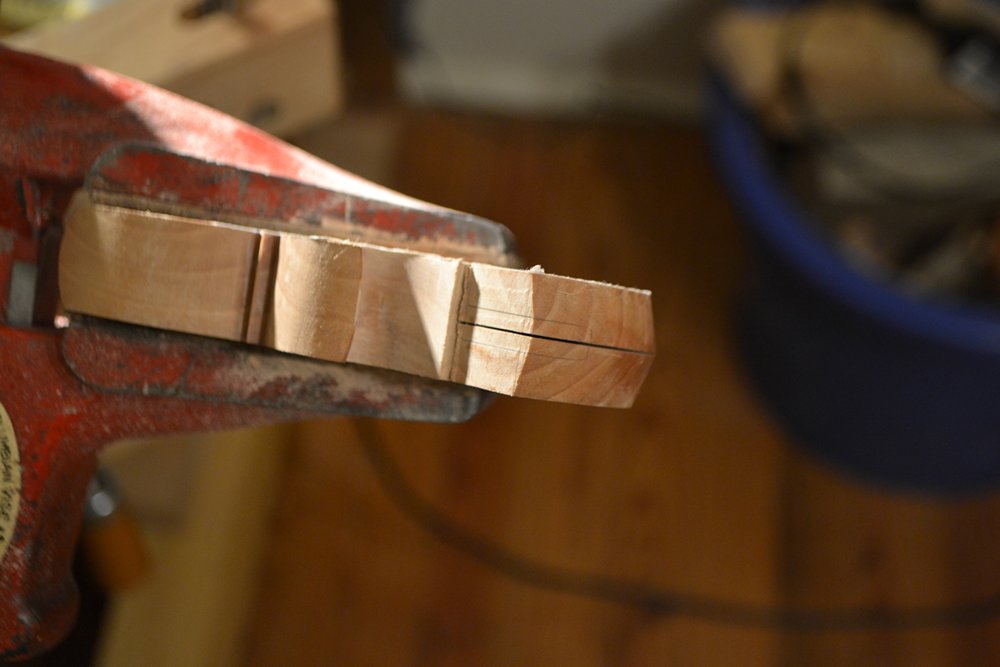
Mortise marked out.

Mortise marked out.


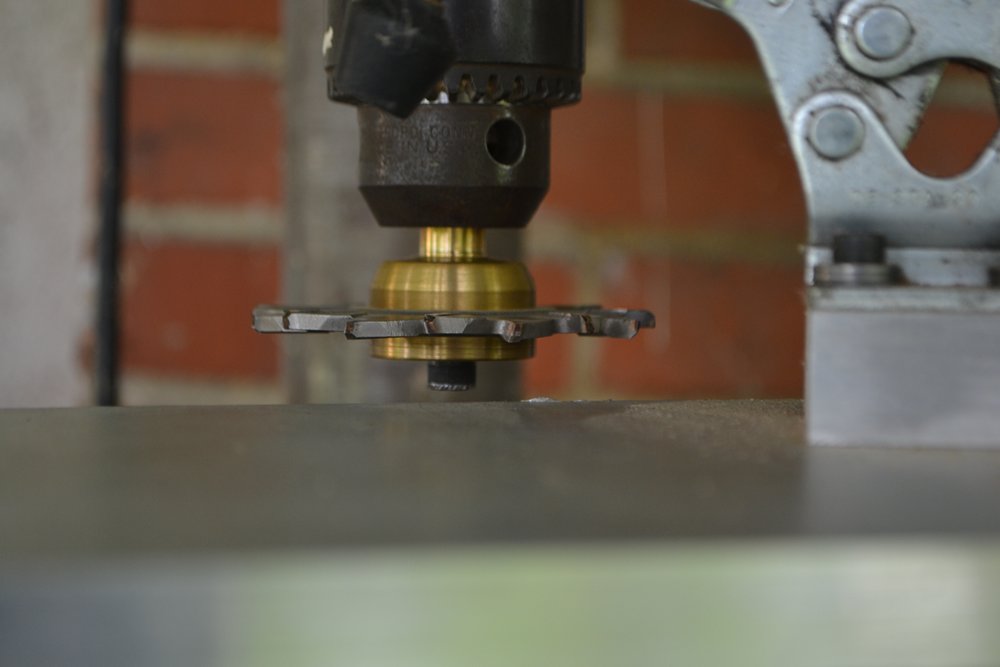
To ensure that the mortise is parallel to the cheeks, I use a special cutter to begin the slot.  This cutter began life as a metal cutting saw.  If you look closely, you may be able to see that the corners of the teeth have been ground to match the chamfer on the spines.

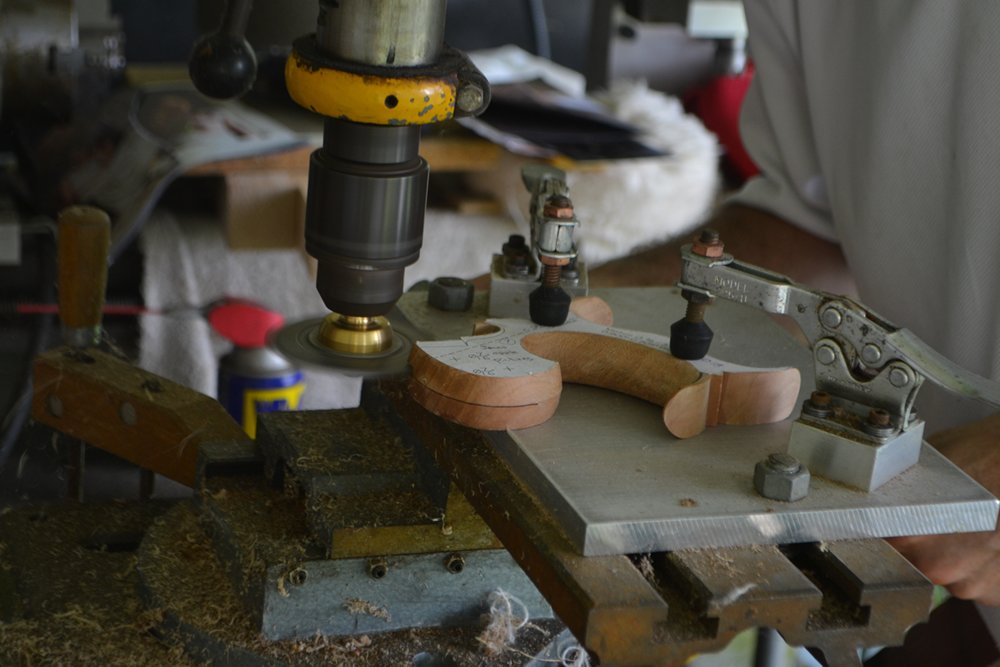
I use this cutter on the drill press.  The handle is held on an X-Y table by two toggle bolts (doing this freehand would be extremely inadvisable).

The cutter I use to begin the mortise.  The chamfered corners on the cutter match the chamfers on the spine.

The cutter I use to begin the mortise. The chamfered corners on the cutter match the chamfers on the spine.

The cutter and setup in use.

The cutter and setup in use.

The beginnings of the mortise.

The beginnings of the mortise.


Now that the edges of the mortise have been cut, the remainder of the work must be done with chisels.  Using the cheeks left by the cutter as a guide, completing the mortise is fairly easy.  Slow work and constant checking with the spine usually yield a close fit.  

If needed, the mortise can be widened with a Vixen file or chisel.  A mortise that is too narrow forces the cheeks apart, which leads to stresses when they are pulled back together by the saw bolts.  If this stress is too great, the wood will crack around the mortise.

Cleaning up and completing the mortise.

Cleaning out the mortise.

More cleaning up and completing the mortise.

More cleaning out the mortise.

Yet more cleaning up and completing the mortise.

Yet more cleaning out the mortise.

And even more cleaning up and completing the mortise.

And even more cleaning out the mortise.

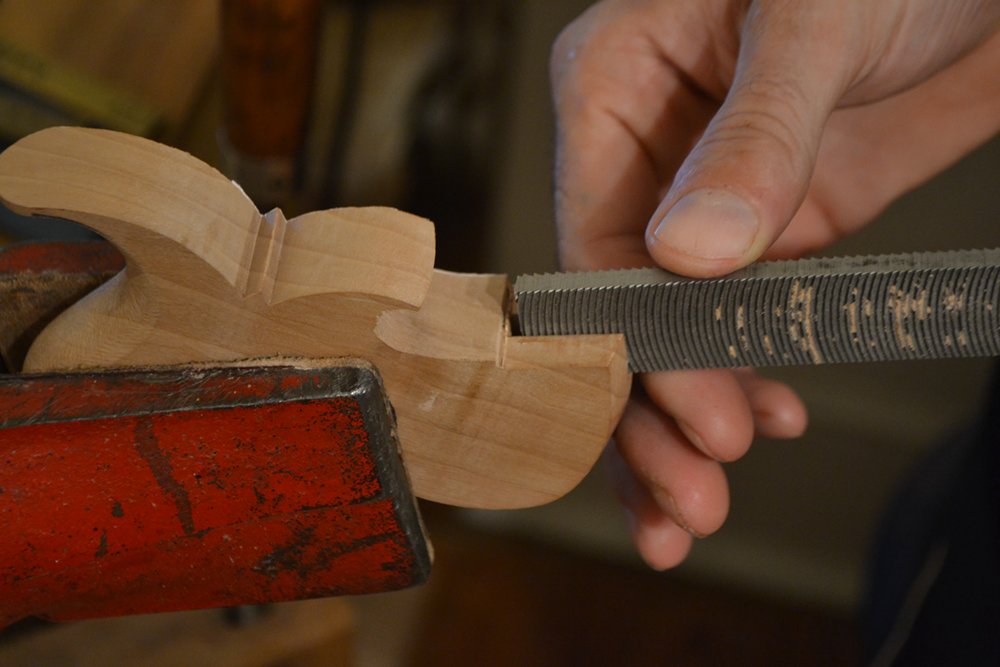
A Vixen file can be used to widen the mortise if needed.  At times, I also use a chisel to do this.

A Vixen file can be used to widen the mortise if needed. At times, I also use a chisel to do this.


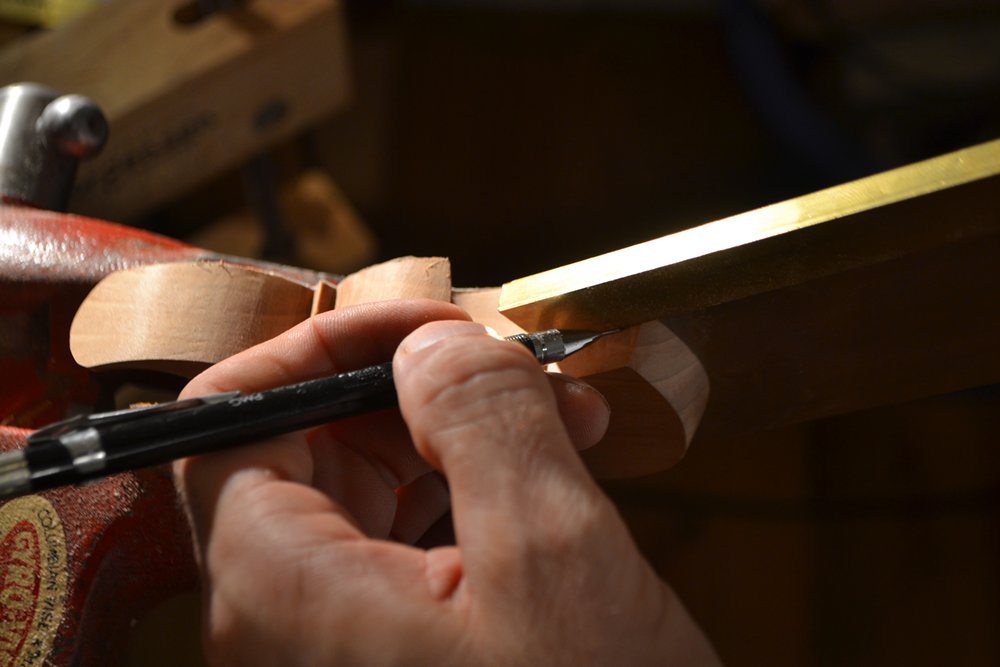
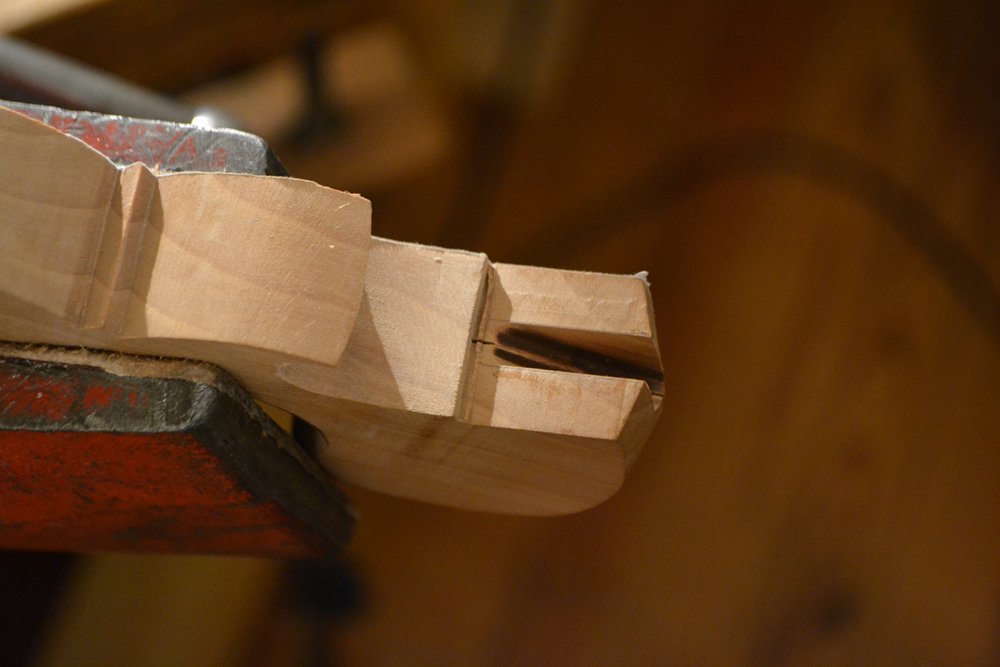
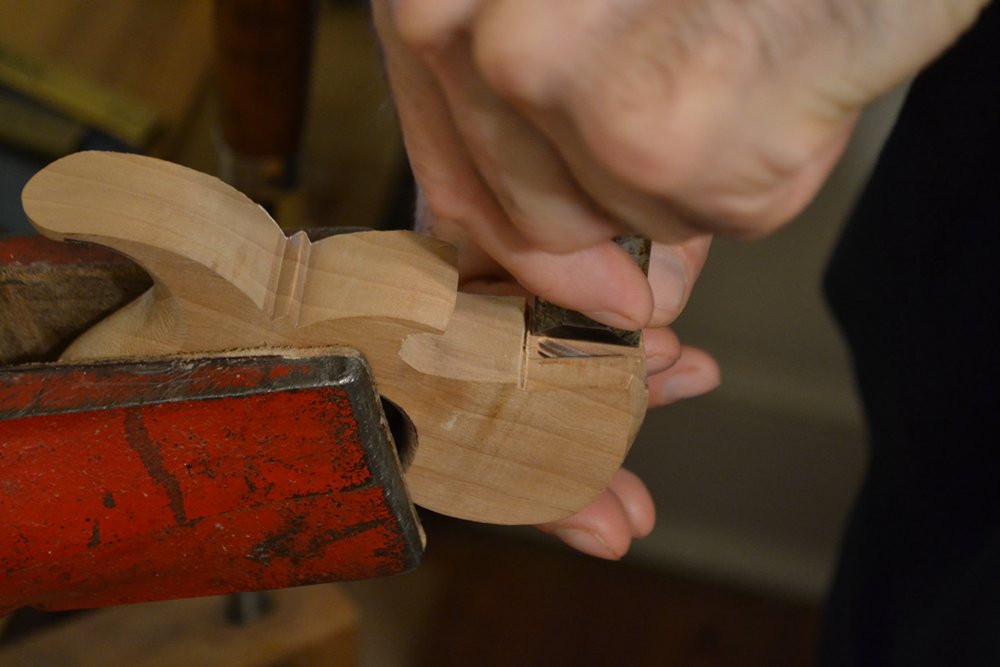
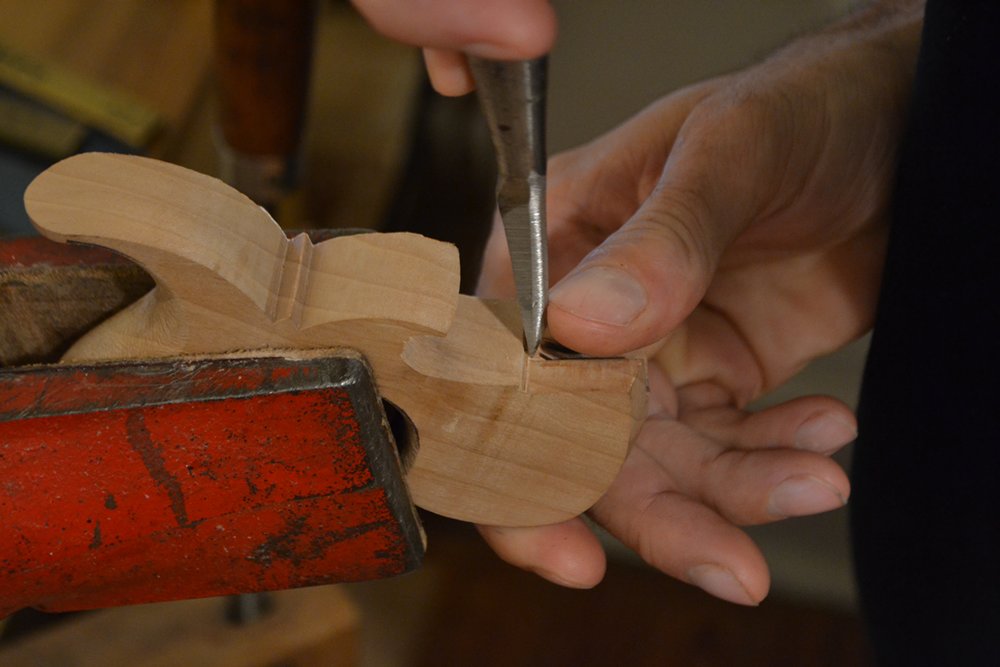
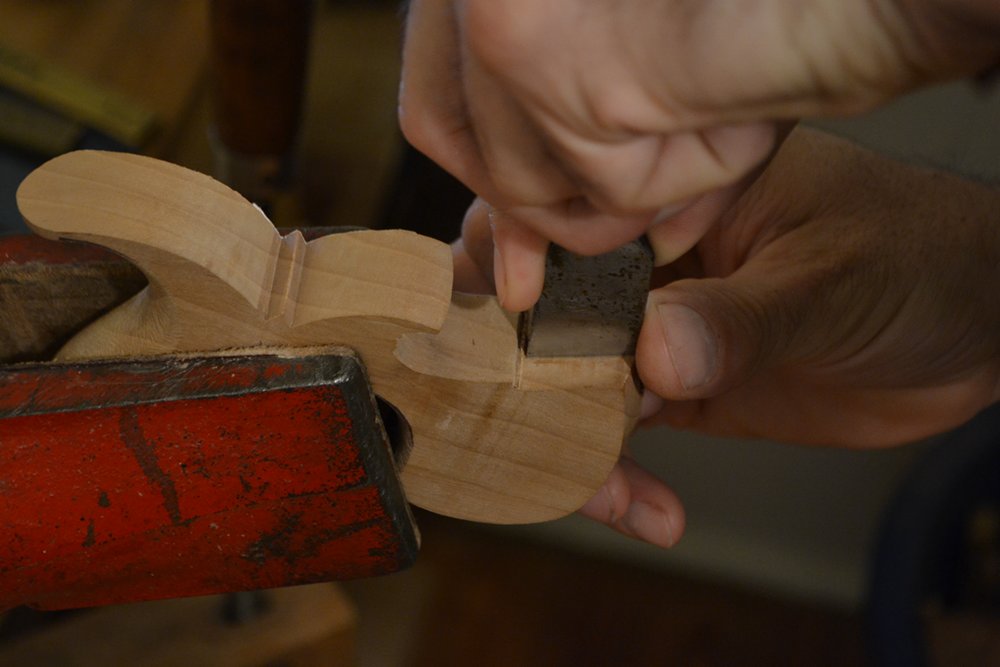
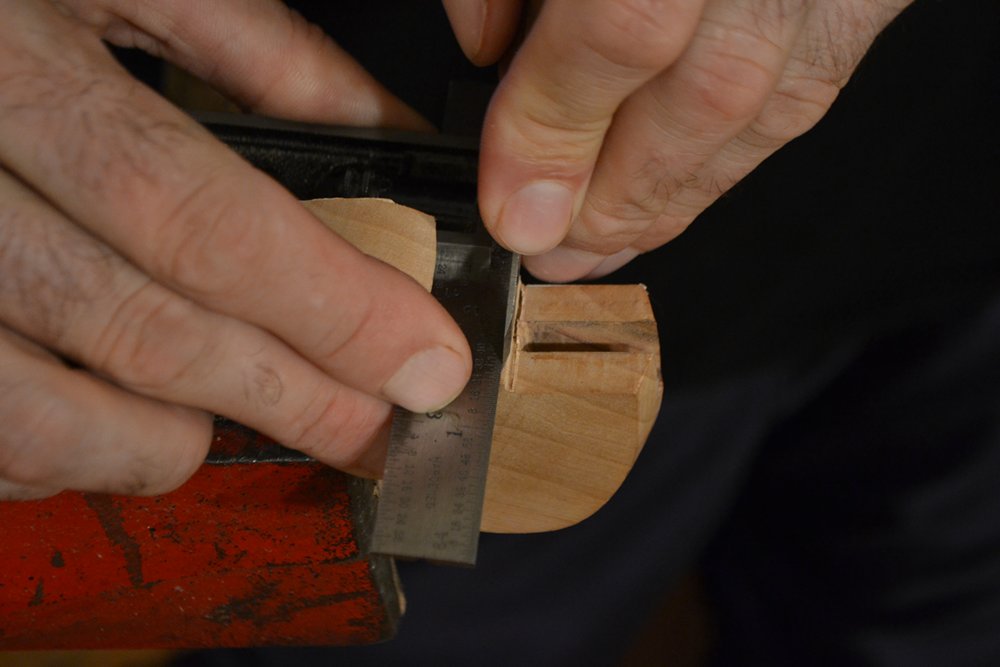
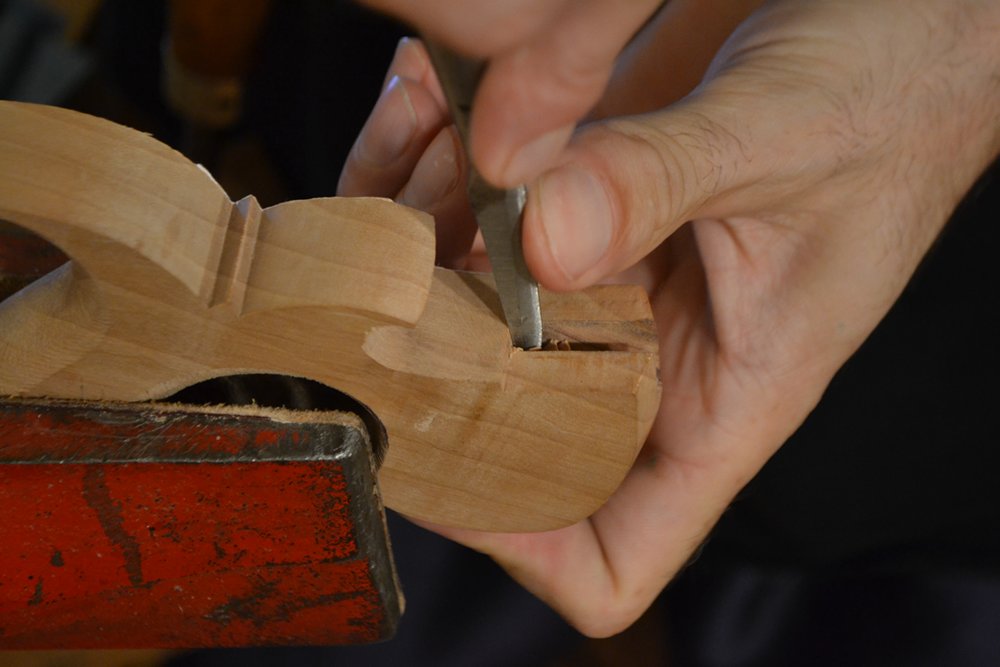
The little step is squared up with a marking knife and/or chisel that is guided by a square.  The last thing I do is extend the back of the mortise to bring it in line with the step.

Clean up the step with a square and marking knife and/or chisel.

Clean up the step with a square and marking knife and/or chisel.

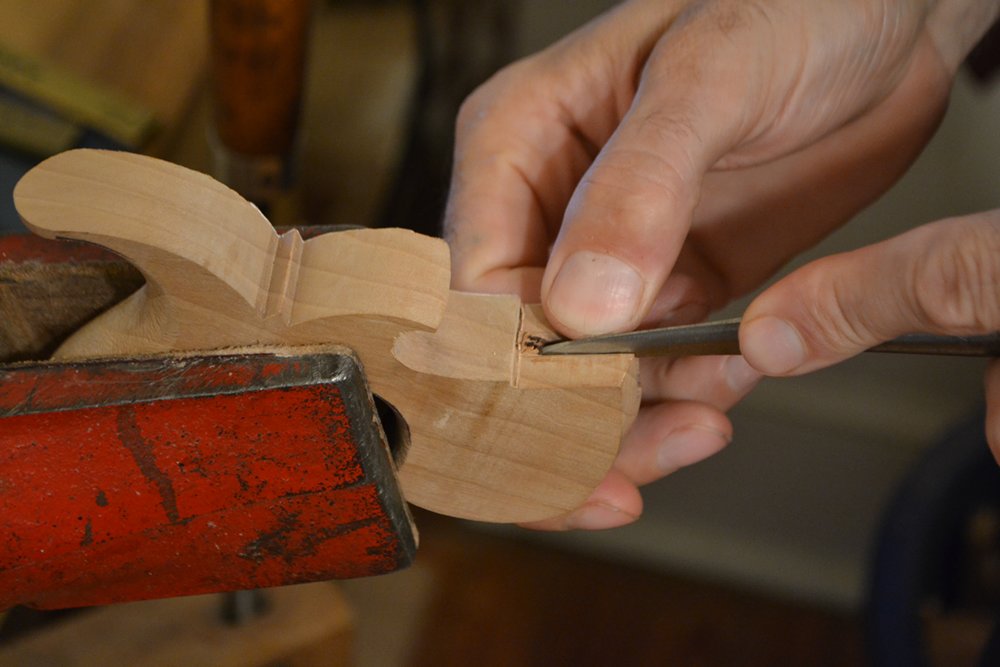
Extend the back of the mortise to align with the step.

Extend the back of the mortise to align with the step.


And if I did everything properly, the result is a nice, clean mortise that the spine just slips into.

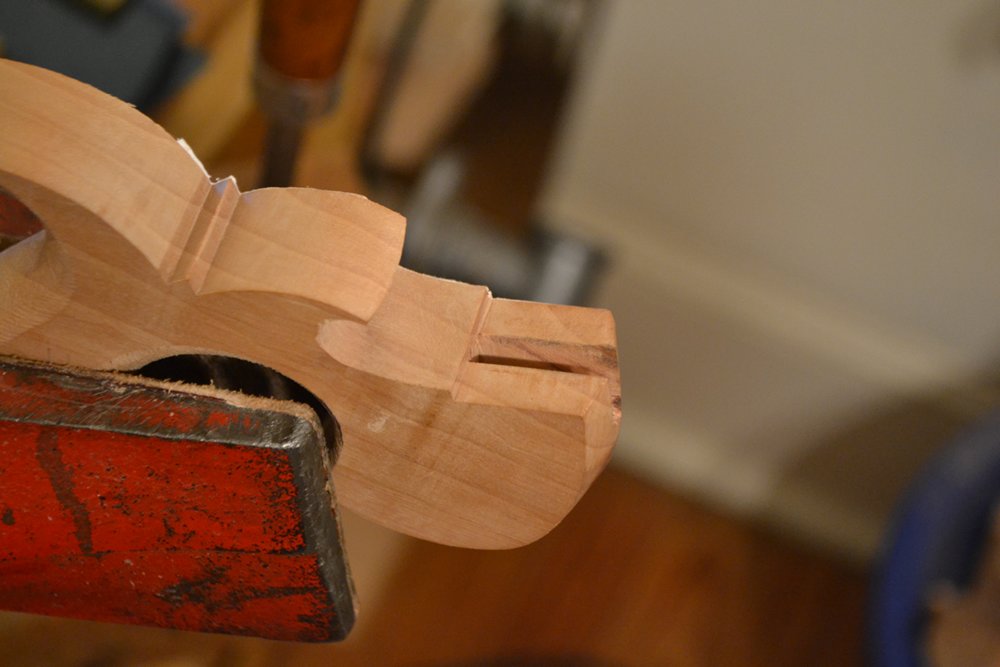
The completed mortise.

The completed mortise.

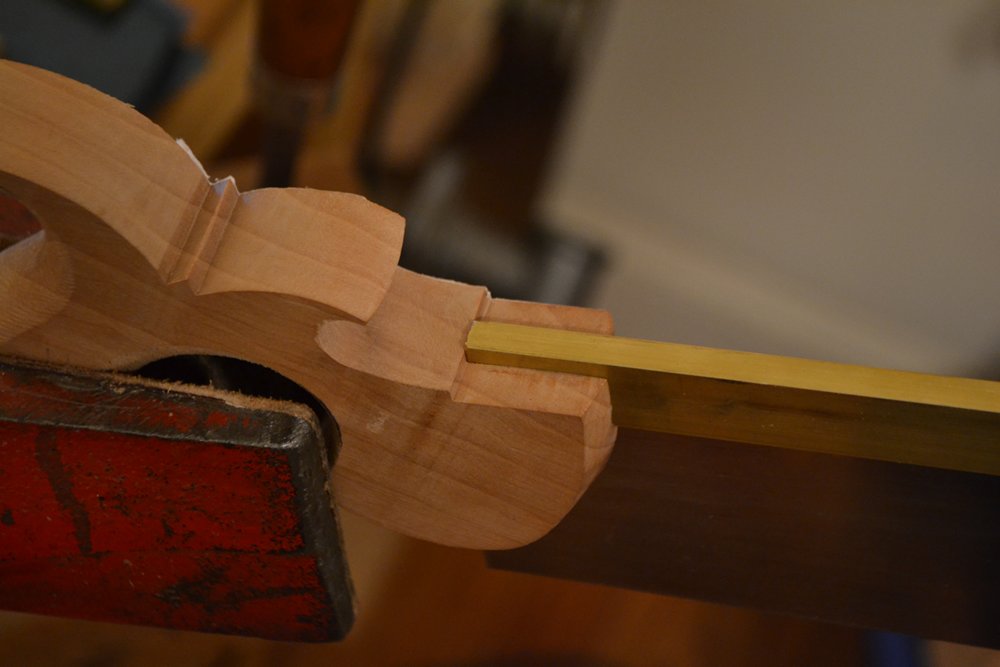
Checking the fit of the spine and the blade.

Checking the fit of the spine and the blade.

Posted in Saw making | 2 Comments